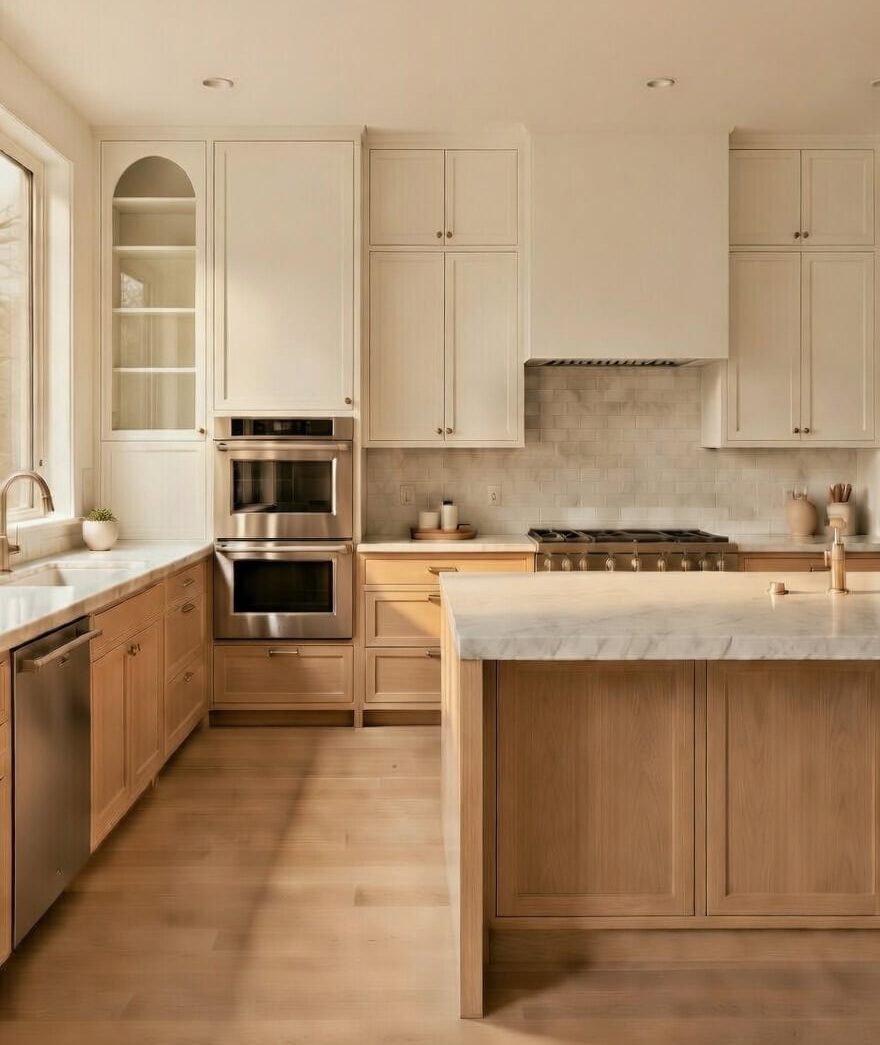
Every January, design magazines predict the death of white kitchens and the rise of jewel tones. Some of it is real. Some of it is wishful thinking from people who spend more time on Pinterest than on production floors.
At Caron, we manufacture thousands of cabinet doors every week for shops across North America. We don’t predict wild trends — we watch them arrive in our order queue. Here’s what actually happened in 2025, and where we think 2026 is heading.
The shaker door is still the most ordered profile in the industry. It wasn’t replaced by geometric inlays or chevron motifs in 2025. But it did evolve.
The biggest shift: the move from traditional recessed shaker to the centred shaker — where the panel sits flush or centred within the frame rather than recessed to the back. It’s a subtle change that gives the door a more modern, balanced look while keeping the familiar five-piece proportions designers trust.
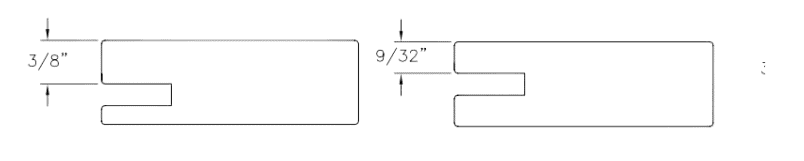

Meanwhile, the skinny shaker continued to gain ground — thinner stiles and rails for a sleeker, more contemporary proportion. We saw slight variations in rail width and edge profiles throughout the year, but the core concept held strong. When a customer asks for “something modern but not too modern,” the skinny shaker is almost always the answer.

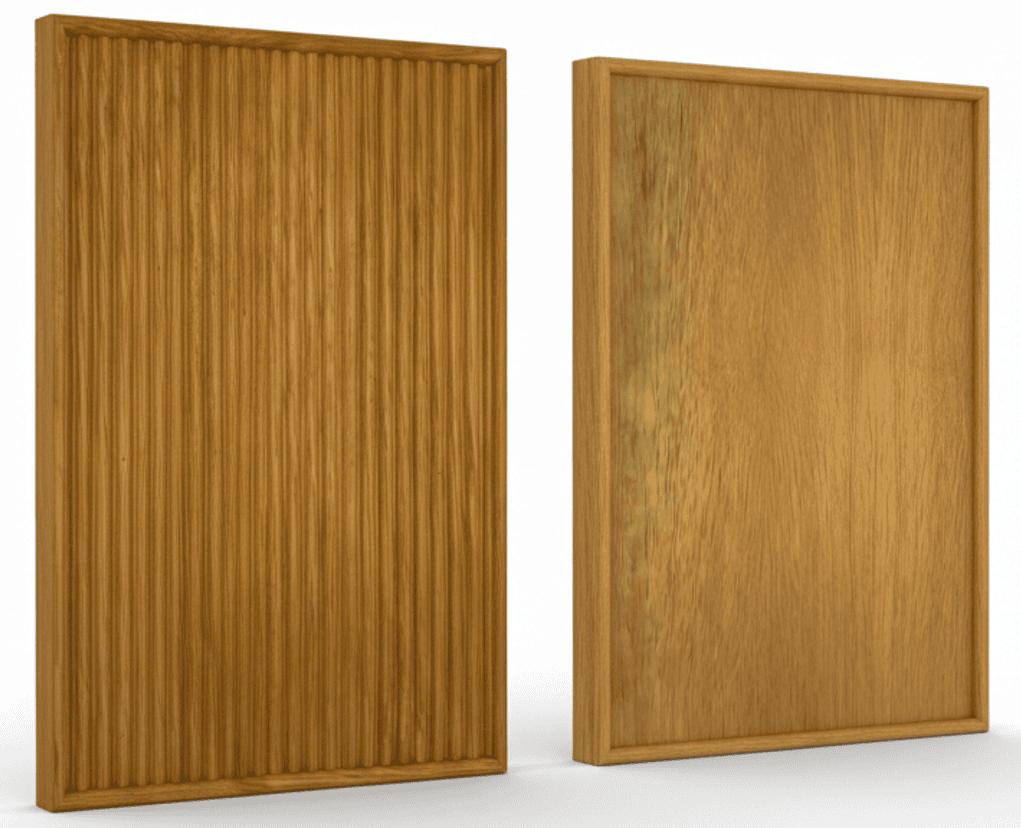
Early 2025, fluted doors were the texture of choice — vertical grooves on the centre panel, framed with a small bead detail on the outside of the stile and rail. Fluted gave designers the textural depth they wanted after years of flat, featureless slabs.
But as the year progressed, orders shifted toward a flat centre panel with the same outside bead. The bead stayed for its shadow line and visual interest. The centre panel went flat — and the wood grain became the feature.
Note: There's also a practical reason behind this shift too: flat centre panels are a safer bet against warping. Fluted profiles applied to a plywood panel creates tension in the component, and on larger doors, that tension can lead to warping issues. The flat panel can mitigate that risk

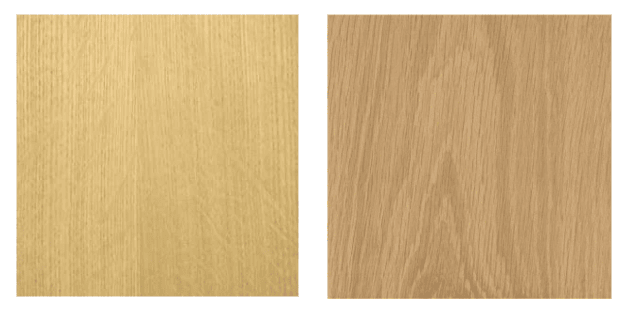
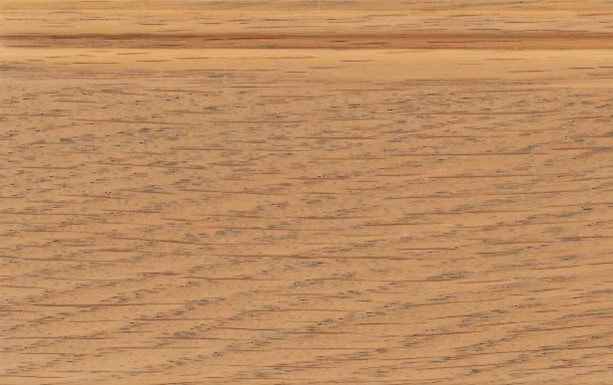
More-over, we saw a significant move toward flat cut oak over rift cut. For those less familiar: rift cut has a straight, uniform grain. Flat cut shows the cathedral pattern — more organic, more expressive. The shift tells you where the market’s head is: customers want to see the wood’s natural character. The grain does the decorative work that the fluting used to do.
The logic is clean: bead on the frame for detail and dimension, flat cut oak for warmth and character. Each element has a job. It’s a more restrained, confident look than full fluting — a market maturing past initial excitement into something more intentional.
We pulled two sets of data from our finishing department: our bestselling colours and our newest custom matches. The contrast tells a story more honest than any trend forecast.
The bestsellers: overwhelmingly white. Out of our top sellers, roughly three-quarters are in the white-to-cream spectrum. Pure whites, warm off-whites, antique creams, soft ivories. The only non-neutrals that crack the top 20 list: one navy, one black, one gray.


So let’s put the “white is dead” narrative to rest. Homeowners may admire a moody green kitchen on Instagram. When it’s time to sign off on a renovation, most still reach for white.
The new requests: a completely different palette. The custom colours our finishing team matched in 2024–2025 are dominated by sage greens, muted olives, warm taupes, and earthy gray-greens.

Not a single burgundy. No terracotta. No aubergine. The “jewel tone revolution” that forecasters keep predicting isn’t showing up on our shop floor
The shift is gradual and grounded. Cool grays are warming up and picking up green undertones. Whites aren’t being replaced by bold colour — they’re being complemented by nature-inspired accents. A sage green island with cream perimeter cabinets. An olive pantry door against warm white uppers. Not a revolution. An evolution.
Our newest developments include stains with visible grain. Even when customers want dark, dramatic colour, they still want to see the wood.
What this means practically: Our reps across North America reported the same thing all year — clients asking for more stained wood, maple and oak especially, over solid painted colours.
That shift has real implications for finishing. Staining real wood requires different processes, skills, and quality control than spraying solid paint. Grain variation, absorption rates, colour consistency across a batch — these challenges multiply with prominent flat cut grain. For shops handling their own finishing, the question becomes whether to invest in upgrading staining capabilities or outsource to a manufacturer with a dedicated finishing department. In an uncertain economy, that’s not a trivial decision — especially when the demand shift may require capabilities your current setup wasn’t designed for.
A couple of smaller signals worth noting — not because they’re dominating orders, but because they’re showing up often enough that we’d be leaving something out if we didn’t mention them.
Soft arch details. We’re seeing more requests for a gentle rounded arch at the top rail of an otherwise standard door — echoing the archway trend that’s been building in kitchen design. Arched pantry entrances, arched range hoods, and now, that same soft curve in the door profile itself. It’s not a volume play. It’s showing up on feature pieces in higher-end projects. But it’s appearing on more spec sheets than it was a year ago, and it’s worth having the option in your catalogue.
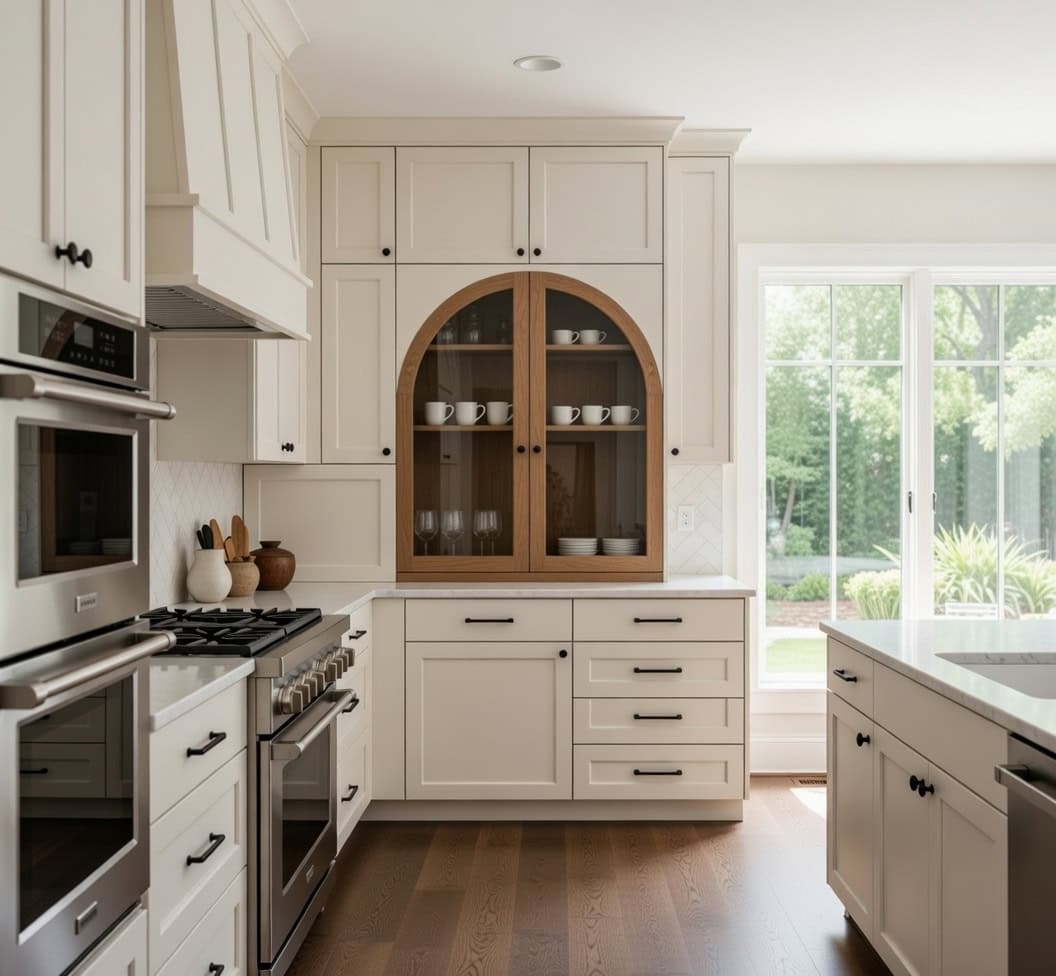
The thread running through every trend in this article: the market is moving toward authenticity. Real wood grain over painted surfaces. Natural character over manufactured texture. Earthy, nature-inspired colours over dramatic jewel tones. The quality of your materials and your finishing matters more than it did five years ago.
Want to see samples of our flat panel with bead in flat cut oak, or try one of the new sage and earth tone finishes from our colour lab? Reach out to your Caron rep or contact us directly. We’re always happy to talk doors.